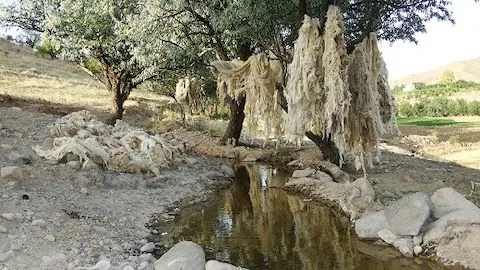
The wool placed on the sheep’s body contains three impurities as follows: A-fat of wool or (natural lushoxs): composed of mixtures of fatty acids and voxins. Nets: The result of the natural secretions of the sheep’s body, such as sweat and urine, etc. that dissolve in water and neutralize the creation of a stagger environment, these impurities include potassium, sodium, calcium, magnesium and organic acids. P-non-natural lipophs: Includes smoky cellulose materials, leaves of plants, straws, pimples that penetrate the fibers from the animal’s living environment, etc. and these impurities are dissolved in the chemical method, including chorus. The washing of wool is done in two directions: 1) preparation of wool for paint and weaving. Health for people who work with it. If the wool is removed from the so-called animal (walking, or a half-hu) it is significantly free of impurities, and this is a help to the next hatchers. When washing wool, it should be noted that these natural fibers are sensitive to alkaline materials and that these substances should not be used, and that too much heat causes wool and oil is oversized. You wash raw wool in a variety of ways, below three types: one-stop wash: in this method the wool is washed in successive ponds 4 or 5th, so that the fibers are transferred to another pond by a special fork. Second, by freezing: If wool fibers are placed in 30 degrees below zero, impurities are converted into powder by specific devices and separated from fibers. Washing with solvents: Organic solvents such as (carbon tetraclave, wholeeroform,benzen) are also a good washer for wool, but in the selection of these solvents, it should be noted that it is safe and inexpensive, while providing it simply can be done by people because it is done. It is generally washed in two wool environments. A-shot wool in private and home. (b) washing in a machine and factory.